



This issue is sponsored by LMNT Electrolytes. LMNT has been part of my daily routine through the last 8 years of concussion recovery, and I never travel without it. My physical therapist first prescribed electrolytes (particularly sodium) as part of my treatment plan—and she now uses LMNT herself. Try LMNT today (or replenish your supply) and get a free sampler pack with every order.
My concussion—an accident while playing laser tag with my son—was years ago. However, I still have flares of concussion-related symptoms under certain conditions.
This is called Persisting Symptoms After Concussion (PSAC) or Persistent Post-Concussion Symptoms (PPCS). While most people recover from a concussion in a few weeks, some concussion patients continue experiencing symptoms more than 3 months after the injury. Estimates of frequency range from 10% to 30%, based on how symptoms are defined, the population studied, and the follow-up period.
For some, like me, these concussion-related symptoms can last years. However, my triggers have slowly fallen away with time and physical therapy, and activities that used to create symptoms no longer do. The flares come less frequently, and though they can still be severe, I recover from them far more quickly.
Today, reliable triggers include travel (especially long days), bright/flashing lights, crowds, and heat (like hot yoga, or spending too much time outside on a hot day). Anything that makes my brain work too hard in these conditions, like navigating in an unfamiliar city or performing for media, compounds these triggers.
And so I bring you… Japan. (Sound on for the full effect.)
The triggers were triggering
I was told there would be huge crowds, bright flashing lights, and lots of noise. I thought I was prepared for that, but they far exceeded my expectations. I was also unprepared for the way general navigation would impact my brain. I couldn’t read 80% of what I was seeing, which meant my brain had to work that much harder to navigate even the simplest things. That’s the first time I’ve experienced this. (I’m not fluent in German, Spanish, or French either, but during my travels, I could read the letters and match them to spoken words.)
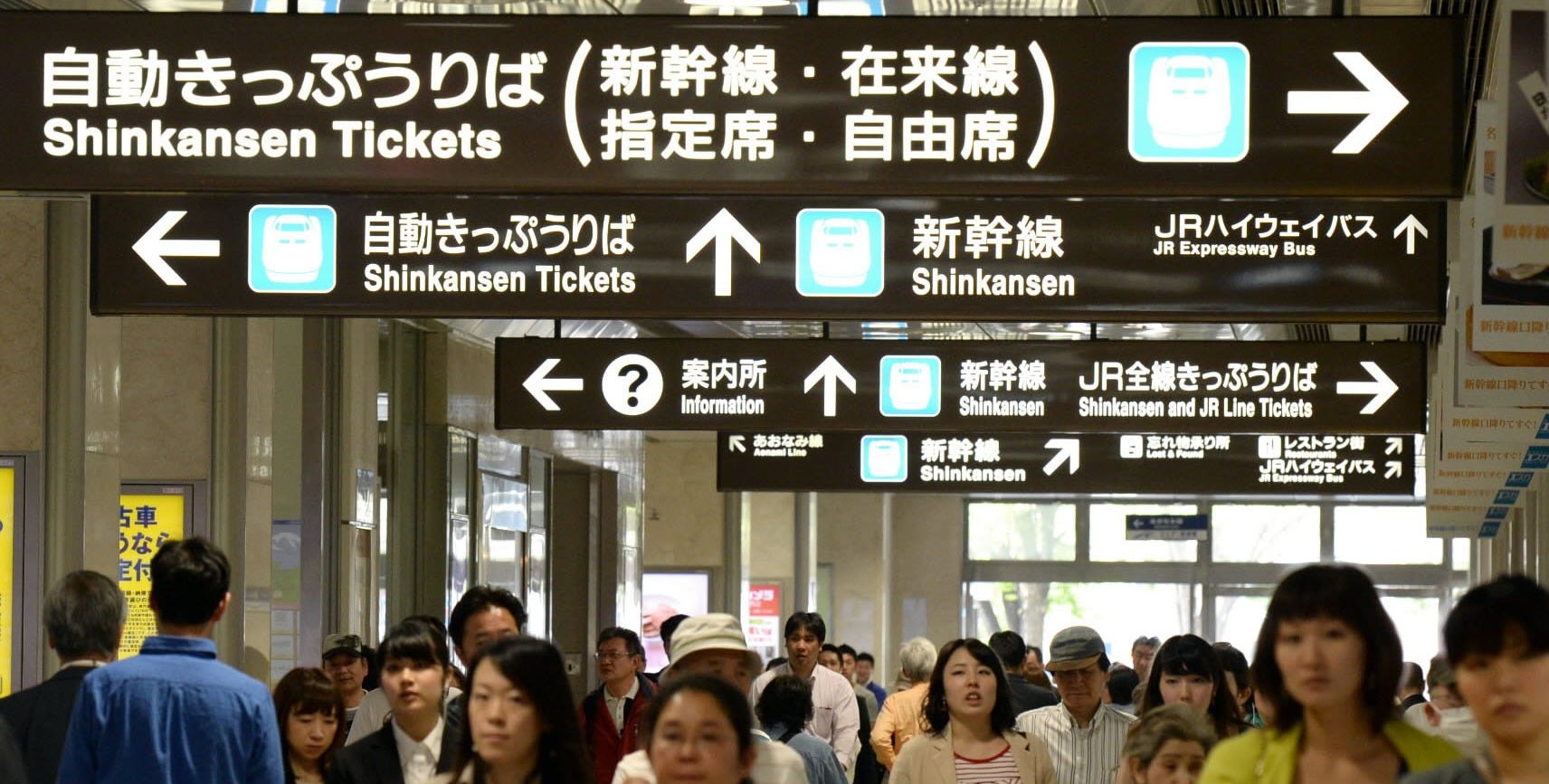
We took the train often, and the unfamiliar websites, apps, and stations did me in for days. (Once I got the hang of the color and number coding, it got easier, but that took a week.) And though I learned and used more Japanese than the average tourist—and nearly everyone we interacted with spoke at least some English—it was still incredibly taxing. All of this created the perfect storm for a two-week concussion flare.
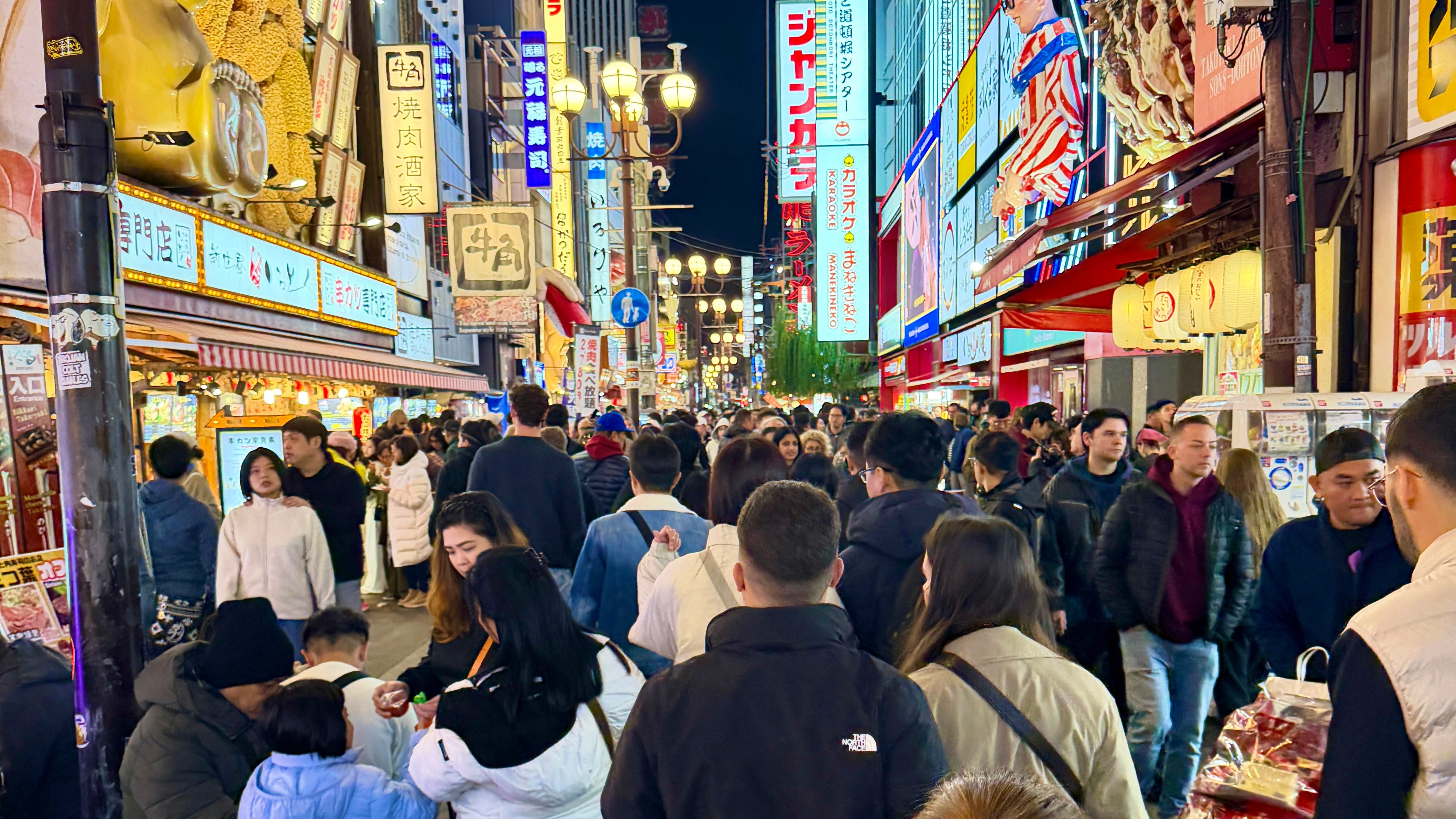
To be clear, I found it all invigorating. I was surprisingly comfortable with the massive amount of people everywhere, at every time of day. I’d happily head back out after a long day of crowded touristing to walk around Shibuya, Dotonbori, Shinsekai, and Asakusa. I’d take in the lights, the food, the shopping, and even the crowds. I wanted to experience as much as I could, and there was so much to see. We walked 25,000 steps a day, spent 14+ hours out exploring, and took multiple trains most days to see things on our list.
But it came with a cost, and it was heavy.
The flare was flaring
Sometimes, my symptoms come on slowly, and I’ll only get one or two. This trip, they all hit at once, thanks to jet lag, being under-slept, and throwing ourselves straight into the deep end (Shibuya Crossing at night).
Here’s what they feel like:
Anxiety. This is the first signal that I’m having a flare. I’m not an anxious person, but I start questioning everything. Are we going the right way? Are we still going to the fish market? Where is it? How do we get there? Are you sure? This is paired with irritation—I become stressed and snappy.
Vision symptoms. The best way I can describe it is that my eyes don’t work well together. It’s hard to read small print (like a menu). At its worst, reading a book at night is too hard; my eyes keep skipping lines and I can’t absorb what I’ve read.
Light and noise sensitivity. Bright lights hurt my brain, and it’s hard to focus. I especially struggle when competing sounds overlap in a clashing way. It comes up the most when there is too much background noise and someone tries to talk to me.
Emotionality. I get super emotional and cry easily, over small things. Or nothing. I just cry.
Indecision. I can’t make a decision to save my life. Where should we go? What should we do? What do I want to eat? I need someone else to take the wheel or I’ll just spin myself out.
I also lose my words—it took me five minutes to remember the word “indecision” when I was trying to describe how I felt to Brandon. At its worst, I get tinnitus, headaches, and sometimes dizziness.
These symptoms escalated day after day, mostly because I wasn’t sure what I needed to do to buy myself some capacity. At home, I’d stay in, speak to nobody, and rest for a day or more. Here, that meant losing precious days of our trip, and I desperately wanted to avoid that.
A week into the trip, I hit my breaking point. We were supposed to leave for Kyoto at 5 AM the next day, but I told Brandon I physically couldn’t do it. We decided to stay in Osaka the next day and aim for Kyoto the following morning.
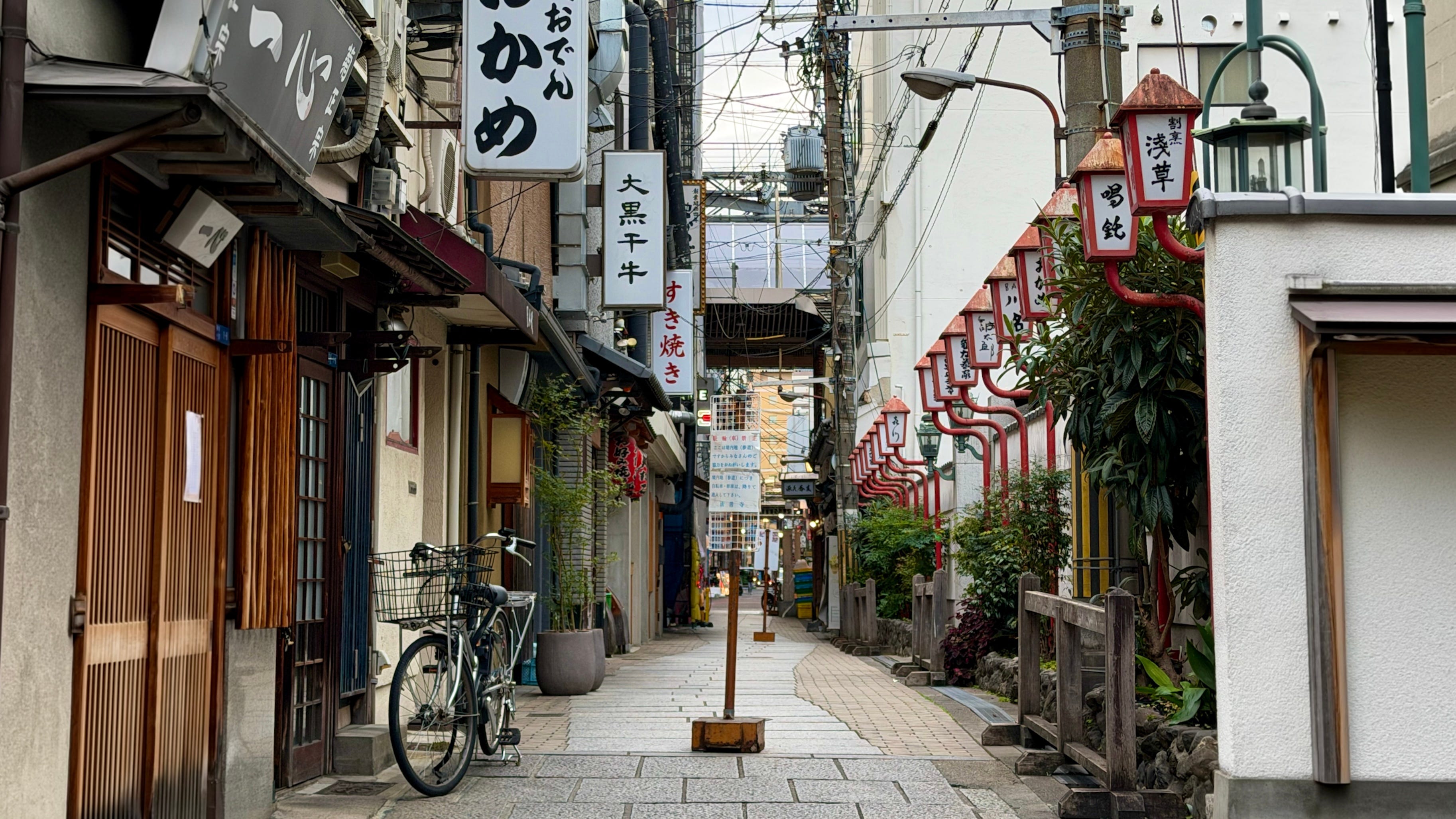
Brandon got up super early the next morning and met a friend to shoot some photos. I woke up around 6 AM, and went out on my own to wander. The streets were quiet—no rush hour commuters, taxis, or tourists. I found a neighborhood shrine that felt so peaceful, I stayed for about an hour. I slowly made my way back towards home, discovering more traditional side streets and alleys that I had missed among the crowds and bright lights.
Those few hours on my own restored my capacity by a shocking amount. The wide field of vision, early morning sun, open streets, and quiet were exactly what my brain needed to rest. We all had a quieter day until we left for Katsuoji Temple mid-afternoon. It was raining, grey, and unusually quiet there too, which was a blessing. The next morning, we were able to make our 5 AM train to Kyoto, and spent most of the day there exploring.
I immediately built these lessons into the rest of my trip.
I carved out alone time every day, something I hadn’t done up until this point. I discovered that walking through crowded, neon-lit streets at night alone was far less stressful than doing it with my husband and son. I even managed the train on my own with no issue, probably because I felt no pressure to keep up, make decisions for anyone else, or get everything right.
I’d also find time to be outside when it wasn’t crowded or loud, usually by meandering to a coffee shop or konbini early in the morning. Sometimes, it was as simple as walking home on side streets instead of through the crowded shopping malls.
Finally, I started tapping out immediately when I felt my concussion start to yell, instead of trying to tough it out. One night, Brandon and I arrived at Tsūtenkaku Tower to meet some of his friends. Within five minutes, I realized this outing was too ambitious and told them, “I need to bounce.” They understood, continued with their plans, and everybody got what they needed.
It turns out that I didn’t need to stop exploring—I needed to change how I was exploring. And I learned that having control over my own pace, direction, and decisions made a huge difference in how much stimulation I could tolerate. These strategies allowed me to keep the rest of our schedule without fully crashing out.
The recovery
The first few days back home were rough. Between the 15 hours of travel time and 16-hour time difference, my symptoms were at a 10 out of 10 for the first 24 hours. I went to bed early, slept for 10 hours, took the dogs out for a long walk, and felt much better.
I stuck to my recovery routine through the weekend. I went to bed early, slept as long as I needed to, stayed off my phone, and had groceries delivered. As I write this on Sunday afternoon, I’d say I’m 75% recovered, which feels like a miracle after a trip like this. We’ll see how returning to work tomorrow feels, but I’m confident that I have the tools I need to calm all of my symptoms relatively quickly.
The bad news is that eight years after my initial injury, I’m still experiencing concussion symptoms. The good news is that my flares are far less frequent and far easier to recover from than ever. (The last time I had a serious flare was Expo West in March—if you’ve been, you get it.)
Will this keep happening forever? Maybe, although I still have hope that with time, I’ll be able to visit a city like Tokyo with no negative repercussions. Until then, I am grateful every damn day for how far I’ve come since those first years after my injury.
XO, MU

Even without post concussion symptoms, navigating Japan can be a challenge for all the same reasons (noise, lights, exhaustion). Being 4th generation Japanese-American doesn't help, since neither myself or my kids speak a lick of Japanese although we look like we should, and that, combined with four twenty-somethings with opinions and no experience with public transportation could've created a really lousy experience. But all of your suggestions - know your triggers, symptoms, and limits - works every time for us as a fam! I'm so grateful we had some understanding of that before we left. Offering simple "shall we do this or that" options which I had planned ahead for also helped when everyone was feeling overloaded and overstimulated. Glad to hear you're home safe and feeling better!
All of your symptoms feel like what I have felt off and on for years with MTHFR, which makes it hard for my body to methylate B vitamins. Taking methylated vitamins from a reliable source helps. It’s like under high stress, my brain uses up all its energy and it lags in processing big time. Giving it pre-methylated b12 and folate especially helps.