


Most of my musings here are personal—but sometimes I put on my Operator hat and dive into news, trends, and current events in food, health, and wellness. This issue is brought to you by the DAILY BAR from Kreatures of Habit. It’s got 20g of protein, 3g of creatine monohydrate, and 9g of fiber all in one delicious, portable package. Save 20% on your first order with the code MELISSADAILY.
Expo West is the world’s largest trade show for natural and organic foods, beverages, supplements, personal care, and home care products. Every year, I walk the floor with the Whole30 team each year to catch up with our Whole30 Approved partners, evaluate brands for new partnerships, and spot trends for the coming year. After 17 years in health and wellness and a decade at Expo West, it’s become easy to identify the brands, products, ingredients, and trends that are actually going to stick—and what’s just a flash in the ceramic-coated pan.
I also spend a good amount of time researching trends, discoveries, and current events around CPG (consumer packaged goods), food and beverage marketing, the diet industry, and GLP-1s. Over the last year, the one thing all of these sources have in common is an unprecedented focus on protein.
Let’s dig into the what, why, and what’s next for our current macronutrient du jour de l'année.
Protein is everywhere

While walking around Expo in March 2025, I wondered if the “protein in everything” trend was getting out of hand. One year later, the same show proved me right—protein is out of hand. At Expo, we saw (buckle up):
Protein coffee, protein shakes, protein crispy rice treats, protein noodles, egg white protein chips, protein water (!), protein granola, protein rice, protein coffee milk (??), protein milk-milk (?!), protein cookies, protein bread, protein waffles, protein pancakes, protein pretzels, protein ice cream, protein bagels, protein cereal, protein candy, protein mac & cheese, protein crackers, and protein pasta sauce.
I’m certain I missed a few, and the word “protein” doesn’t even look like a word at this point. But unlike other diet trends, protein isn’t going away anytime soon.
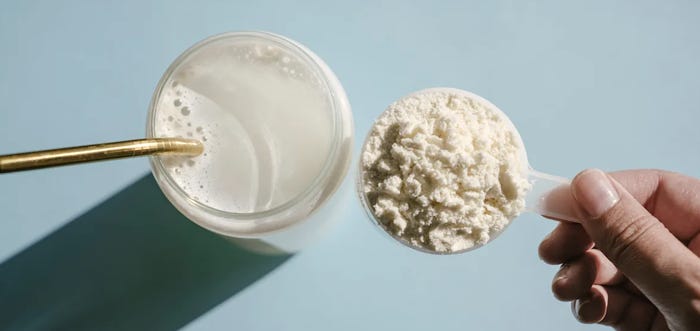
Main character energy
Why is protein still the hottest bombshell in the villa? First and foremost, protein is the only macronutrient that has yet to be demonized. Dietary fat was the villain in the 80s and 90s. When that shifted in the early 2000s, carbs became your new arch nemesis. (Carbs were really the enemy in the mid-2010s, when keto demanded you eat zero while stuffing yourself with fat.) But nobody ever accused protein of making you gain weight. In many people’s eyes, protein is the only “safe” macro left to consume (besides fiber, which I’ll talk about in another article).
GLP-1 use is also a primary driver of the protein trend. GLP-1s are still on the rise. Due to concerns of weight loss reducing lean muscle mass, recommendations for people on these medications always reference protein consumption. GLP-1s also reduce your appetite, so those on the medication need to prioritize protein density. (Density = more protein relative to calories or volume.)
In fact, anyone looking to lose weight—whether or not you’re on a GLP-1—is being steered towards a higher-protein diet. Protein isn’t as calorie-dense as fat, and is a primary driver of satiety (fullness). Protein also helps to slow digestion, keeps blood sugar more stable, and can help preserve muscle mass while in a caloric deficit.
Protein fanfare is also being driven by the increase in menopause-related content and education. We’re talking about menopause far more freely now, and these conversations have given rise to a new and ever-growing sub-culture of wellness. Prioritizing protein during this stage (combined with weight training) can ward off loss of lean muscle and bone mass. Protein is also mentioned in every article about preventing menopause-related weight gain. (That alone would fuel protein’s popularity.)
Bucking the trend
Here’s where things get interesting. Usually with a trend like this, we see the following pattern:
Small, nimble CPG brands create and validate a trend.
Consumers adopt it early because it feels new, different, and value-aligned.
Once the market is proven, legacy CPG (like Nestlé, General Mills, or Kellogg’s) enter the chat.
By the time they pivot, innovate, and scale, the cultural moment has already sailed by (or is on its way out).
Keto is a great example of this: Quest/Perfect Keto/Bulletproof started the trend, and took it mainstream. By the time legacy CPG like SlimFast and Nestlé launched their “keto-friendly” lines, consumers were already moving away from keto (especially ultra-processed keto foods).
Protein, though, is going to be different. I’ll admit, when I saw Nestlé launch its line of GLP-1 friendly frozen meals in late 2024, I thought, “This is the beginning of the end of the high-protein craze.” It wasn’t, and it’s not going to be. As long as people continue to seek treatment with GLP-1s and keep the menopause conversation front and center, high protein offerings are going to continue to reign supreme. (The effect has already trickled down to consumers who aren’t menopausal or on a GLP-1, but now believe they, too, should be seeking out protein.)
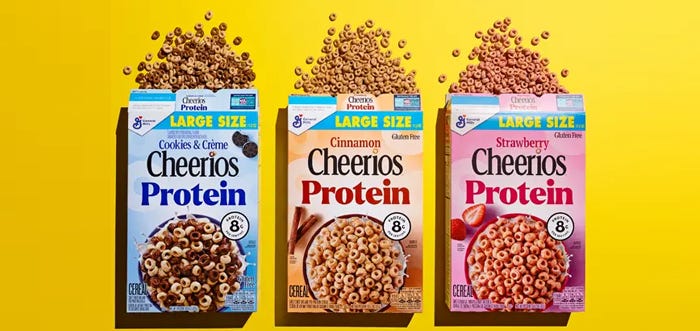
Aside: Some legacy brands are missing the mark—but I’m not sure you’d notice. General Mills launched Protein Cheerios in December 2024, but when it launched, the cereal itself only contains 7g per serving, compared to 3g per serving for the original Cheerios. (I don’t consider 7g per serving “high protein” by any means.) In addition, much of that protein “increase” was due to increasing the serving size. The original Protein Cheerios also contain 12x (!) the added sugar content, compared to the original. (That’s not a typo). The average consumer won’t catch these nuances, and may gravitate to this version simply because it’s marketed as “high protein.” These kinds of marketing games aren’t making anyone healthier.
When it comes to protein, here’s what we will see in 2026-2027:
Consumers getting burned out of high-protein everything. Much like the keto trend, people are going to start to ask, “Do we need protein in this?” or “Are these ultra-processed foods where I want to get my protein from?” (This will take at least a year to really start to show.)
Some legacy brands who have expanded their product lines to include trendy high-protein offerings are going to quietly retire them, once people realize they don’t need protein in their popcorn or sweet treats.
Consumers will start seeking more whole food-based sources of protein, or at least less heavily processed versions. Again, this may take another year. (See specifics below.)
Some UPFs are going to stick. People will continue to eat David bars because they’re low-fat, low-calorie, and high-protein (despite the ingredients or the taste). Same with processed protein shakes, especially as they’re easy to digest (a benefit for GLP-1 users).

Where we’ll be getting our protein
Dairy is going to reign supreme in 2026-2027. (We can thank MAHA for this, at least in part. Happily, raw milk is not trending anywhere except your local urgent care clinic.) Dairy delivers high-protein in a familiar, accessible format. Primal Kitchen launched a grass-fed, dairy-based line at Expo. Cottage cheese is a social media darling—which tracks, given its protein density. Yogurt sales are on the rise, linked strongly to GLP-1 use. However, the dairy train is not limited to minimally-processed foods like unsweetened Greek yogurt—it also includes Chobani’s (and other brands’) low-fat, moderately-processed, alternatively-sweetened high-protein drinks and yogurts.
Meat sticks also sit perfectly at the intersection of protein + whole food. Jack Link’s (which I’d consider a legacy brand) even debuted a no-added-sugar version of their meat sticks at Expo, as a play to compete with new-kids-on-the-block-turned-CPG-giants Chomps and The New Primal.
Protein bars aren’t going anywhere either, although the camps are certainly split. There’s the ultra-processed David bar, which puts macros first, ingredients… (shrug), and taste dead last. You’ve got RXBAR, with an ultra-short, whole food ingredient list and nature-inspired flavors, but significantly less protein. In the middle, you’ve got the DAILY BAR, which is more processed than RXBAR, has a much “cleaner” ingredient list than David, includes plenty of protein… and flavors inspired by a peanut butter cup. There is room for all three.
Finally, lean proteins (like chicken or ground turkey) will remain bestsellers, and I’m just waiting for the GLP-1 crowd to discover tofu? Protein powder and shakes are also going to stay prevalent, as they’re both protein-packed and easy to digest. Protein in snack-sized packages is also on the rise, as GLP-1 users (and busy people in general) look for smaller, more frequent meals. And if the product has both protein and fiber? Chef’s kiss, that’s the dream—and is already driving the next wave of CPG innovation.

Microtrend: Protein + functional ingredients
I fully expected to see lots of “functional” ingredients on the floor, because every year, it’s something new. A few years ago, there was CBD in everything. Two years ago, it was probiotics in everything. This year (as with last), mushrooms were everywhere, with a big focus in the protein category. There were meat + mushroom blends, mushroom-only protein alternatives (sometimes with added pea protein), and functional mushrooms (like lion’s mane, reishi, and chaga) in much of it.
Interestingly, I expected to see far more creatine on the floor, specifically combined with high-protein foods. Kreatures of Habit launched their DAILY BAR four months ago, with 20 grams of protein, 9-10 grams of fiber, and 3 grams of creatine monohydrate (a legitimately functional dose). I’m never without one these days—and I figured given all the hype around creatine, menopause, and brain health, I’d see a lot more copycats. I did not! I saw plenty of creatine gummies, but there are serious problems with those, and I would never waste my money.
There was just one other creatine + protein bar on the floor, but the protein quality was low, the additives made me skeptical, the use of tallow was a 🤮 from me, and one of the reviews said, “Horrible texture, gives you the runs.” Enough said. Kreatures of Habit is obviously ahead of their time, but I suspect we’ll see more of these creatine + protein bars pop up next year.
Microtrend: Clear protein
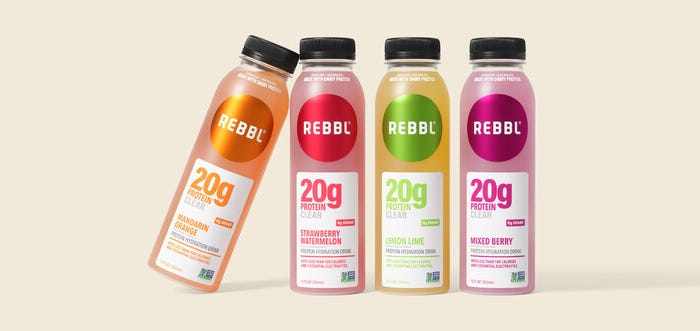
Clear protein was also trending at the show, although this isn’t new. So what the hell is clear protein, and is it any better than opaque (???) protein?
Clear protein is just another version of whey, a protein found in dairy. Specifically, it’s a highly-processed whey isolate* mixed with water. (Whey isolate means it’s been processed to remove the milk fats, carbs and lactose.) Clear protein powder can be mixed with liquids (including water) and remains clear and thin, rather than the thicker, milky, chalky texture of traditional whey protein powder.
Clear protein doesn’t offer nutritional benefits beyond whey protein isolate. Both contain the same amount of protein (about 20 grams per serving), and both are virtually free of carbohydrates or fat. The texture and flavor of clear protein, however, may prove more palatable or versatile. Plus, it looks cool.
*Clear protein can also be made from whey protein hydrolysate, a form which is broken down into pre-digested amino acids. However, the versions I saw at Expo were predominantly the isolate form.
Protein tips for the average person
Should you be eating more protein? IDKID (I don’t know, it depends). If you think so, you can see how I eat 120 grams a day, and how I define a “high protein” food. Here’s what I will say, however:
Many consumers will gravitate towards “high protein” marketing and not dig any deeper, which could be problematic. Label-reading is a skill, and label and nutrition literacy is even more challenging. As with the Cheerios example, you may be making a purchase without understanding the true nutritional impact of the food.
Still, more people are label-reading these days, and if you’re reading this, I assume you certainly are. So please look beyond protein grams per serving. I’d also want you to compare that to the serving size, total calories, and other factors, like added sugar. (That “30 grams of protein” ice cream is for the whole pint, not one serving.)
Price is also a factor in this economy. Protein bars and pre-made shakes are convenient, but also comparatively expensive. You can’t go wrong with higher-protein whole foods, like chicken, shrimp, ground turkey, lean beef, egg whites, or tofu.
Also, taste matters. If you’re really focused on hitting your “protein goal,” you may be willing sacrifice taste or even ingredients for macros, to some degree. Just ask yourself, “Is this sustainable? Is this serving the bigger goal—to be healthy and happy?”
Do you have questions about protein, thoughts on the trend, or predictions of your own? Is there a topic you’d love me to tackle from an operator’s perspective? Leave a comment!
XO, MU

Thanks for sharing! Truly appreciate your thoughts!
"Happily, raw milk is not trending anywhere except your local urgent care clinic.” 😆😆😆