


Note: I like to give my community an inside look at various aspects of my business (Whole30)—and this felt especially important.
Last Friday, I shared a post on my personal feed about ICE, the atrocities we are witnessing in MN, and the culpability of the current administration. I told my team I was sharing it, as what I put up obviously reflects on Whole30—but they were all for it. I did not mince words.
This is hardly the first time I’ve shared my “political” (re: caring about other people) views on Instagram. I’ve got comments going back to 2017 telling me to “stay out of politics” and “stick to food.” I knew what was coming—and it all unfolded right on schedule.
The first 8 hours: Positive comments in support. My followers see the Reel first, and they know my stance (and generally agree, or are at least willing to hear me out).
The next 24 hours: As the Reel gains traction, Instagram starts suggesting it to more people who don’t follow me. This is where the vile comments start rolling in. People began sharing blatant misinformation, crowing about their love for our fascist regime, or making threats to my personal safety (mostly from men).
The next few days: If the post pushes past the tipping point (around 250K views), comments become near unmanageable. I block and report what I can, heart the supportive ones, refuse to enter arguments or defend my position, and focus on what I want to share next.
When I shared my scathing commentary on ICE and Trump, I expected it to follow the same pattern, and was mentally prepared. But… something happened. The positive comments outweighed the vile ones by a landslide. People who didn’t follow me dropped in to agree with my sentiments. The number of threats were minimal (two), the number of blocks were surprisingly low for a post with nearly 1,700 comments, and I didn’t lose the 3,000 followers I fully expected to lose.
I gained more than 5,000.
By contrast…
On Monday morning (3 days later), the Whole30 team met to discuss what we should share on the brand side. We knew we wanted to say something; Whole30 has never shied away from sharing our values. I felt we had to speak loudly and clearly.
I drafted the language, we discussed how we’d handle comment moderation, buckled up, and shared the post.
Immediately, we were hit with negative comments. Vile comments. Hateful comments. Immediately. “Stay out of politics.” “If people would just follow the law…” “Where was your post when (name) was killed?” “I proudly support ICE.” Unfollow.”
And worse… so much worse (that I will not share here).
As the day went on, comments continued to pile up—but nothing was as rough as those first few hours. By 5 PM, comments had greatly slowed, suggesting that IG wasn’t aggressively pushing the post out to new people. I don’t think I took a breath all day.
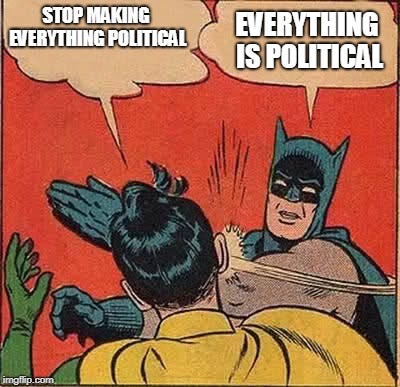
What is this?
This isn’t the first time we’ve shared a similar sentiment on both my channel and Whole30, but it reinforced the perspective I’ve held about brands and social commentary.
On my personal (@melissau) channel:
300K views
48% of the views were from non-followers.
Over 1,700 comments.
Positive comments outweighed the negative 30:1 (at least).
I only had to block a handful of people.
I gained 5K followers.
On the brand (@whole30) channel:
360K views, and climbing
27% of the views were non-followers.
Over 1,800 comments.
A much higher percentage of negative comments (probably 1 in 5).
We blocked dozens of people for misinformation, racism, or hate.
We lost 4K followers (at least).
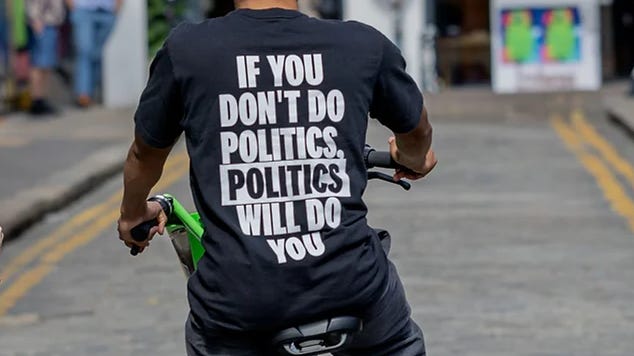
What does this tell me?
First, the Whole30 post was shown mostly to followers, and received far more negative comments. Meaning, our own community members were leaving hateful, racist, definitively untrue messages. It’s not shocking, considering our reach and longevity—the bigger our community, the more diverse it becomes. But it’s greatly disappointing.
Also, people are more understanding when you (a person) speak out. On @MelissaU, I’m perceived as a human being with a lived experience; a person sharing their grief, anger, and values. It makes sense that I, Melissa, would have an opinion. People may not want me to assert it, but they see it as mine.
People don’t feel the same about a brand speaking out. Even if they’re generally a fan of the brand. Even if they consider themselves aligned with your message. (We had a lot of, “I don’t disagree, but I don’t want to see it in my feed,” mostly from older white women.) A person can have an opinion, but a brand can’t. A brand is supposed to be, I don’t know, above all of this?
On the Whole30 feed, we’re seen as a commercial entity, a service provider. We’re something they “pay for” and consume. That flips a switch for a lot of people. The same words become, “A company is telling me what to think.” And “stay out of politics” is usually code for, “don’t disrupt my relationship with this brand.”
There is also, perhaps, a power dynamic at play. As Melissa, when I call out injustice, I’m just one woman, punching up at “the man.” When the brand speaks, it may be seen as punching down or leveraging our power, even if that’s not accurate. We heard this in the comments: “You’re using your platform to influence,” and “You’re alienating half your customer base,” and “Gross, virtue signaling.” People may see it not as a sharing of values, but as an attempt at coercion.
Finally, I suspect many followers simply don’t understand Whole30 as a brand. They see us as a “diet” or “recipe site,” not a mission-driven organization. And at this point in the program’s growth, many don’t even know who I am, never mind the values I hold. I’m not surprised so many people didn’t realize Whole30 has been a woke bitch for years—although I do have to wonder, “Where have y’all been?”
The takeaway
Will this change the way I do things, either personally or for the brand? On the MU side, not one bit. I’ll keep sharing, and if people don’t like it, they can see themselves out. On the brand side… not really, again. It’s important that people coming to Whole30 feel safe and accepted, and can see themselves in the brand. We do that by bringing diverse creators onto our feed, celebrating that diversity, sharing our values, and standing up for people who don’t look, live, or love like Carol from Kansas.
It does make me think about how we share on the Whole30 side, however. I always frame statements “from the CEO” (me), but maybe showing up personally would make the message feel less "coercion” and more “value-sharing.” Maybe we need to sprinkle these moments in more frequently, to get our community more familiar with our mission and vision. Maybe we need to just turn off comments (“we said what we said”), although that’s often seen as a softening of the message—like we’re not willing to stand up for our position.
One thing is certain—Whole30 needs to keep doing what we’re doing. Maybe if we do, other small health and wellness brands will take the leap and start sharing their values loudly and proudly. If we can show them it can be done and support them in it, customers who “don’t want to think about politics” would have to start paying attention. And right now, we need everybody tuned in, especially Carol from Kansas (and other privileged white women).
Share your thoughts in comments—I’d love to know how I or Whole30 could make an even bigger impact.
I definitely appreciate when companies share their values in response to world events. I have a growing list of companies I want to support more woth my business and those I want to avoid/boycott because of their stances, silence, or donations. We vote with our dollars, too.✌️
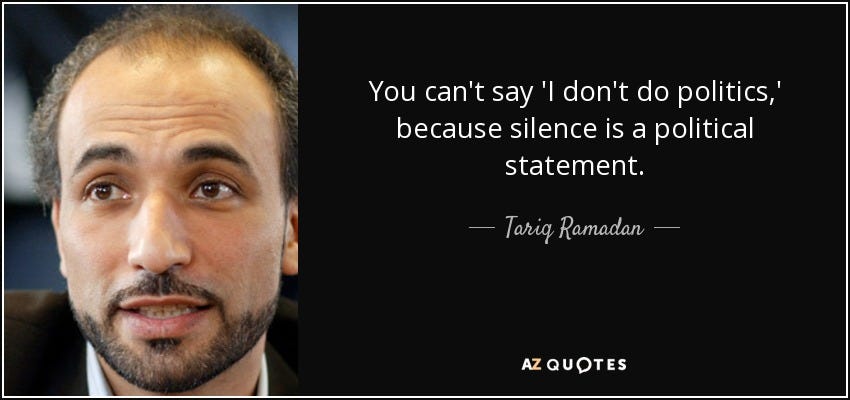
Thank you for speaking up about the horrors going on in this country. Silence is complicity.